

ATTENTION
Attendance at events hosted by the Rocketry Organization of California (ROC) is AT YOUR OWN RISK. Membership in the National Association of Rocketry (NAR) or the Tripoli Rocketry Association includes insurance as a benefit. ROC membership allows you to fly at our launches without paying a daily launch fee. ROC memberships neither provide insurance nor implies any assumption of liability.

Information for Rocket Flyers of All Levels and Ages
Please read this entire page carefully, no matter your level of experience with rocketry—whether you’re launching for the first time or you’re a seasoned flyer. We welcome flyers of all ages, including children, to participate and enjoy the excitement of rocketry. Safety is our top priority, and understanding the rules helps ensure a safe and enjoyable experience for everyone at the range. If this is your first time attending a ROC event, be sure to review ROC spectator rules before proceeding.
ROC Provisions
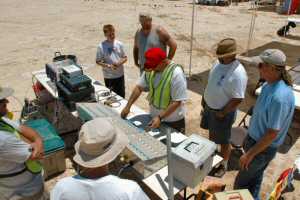
ROC has all of the pads and equipment necessary to put on a large launch, so you don’t have to bring your own pad – just your rockets, motors, and supplies. Vendors are normally on site to sell rocket kits, supplies, and motors; visit our vendors page to contact them directly for availability. The ROC FAA waiver is to 7,000′ AGL with no high altitude call ins.
If you are interested in flying with ROC, please visit our our membership and flyer fees page.
Rocketry Rules and Safety Regulations
Remember that rocketry is an inherently dangerous activity – objects often fall from the sky, sometimes at a very high speed. ROC imparts rules and procedures to make this activity safe for everyone as possible, but bad things can happen if the rules are not followed. Please ensure that you understand the ROC spectator safety rules in tandem with the safety regulations below. Everyone flying must understand and follow these rules to ensure safety:
- Check in at Registration as soon as you arrive and sign the ROC Agreement and Liability Release Form to indicate understanding and acceptance of the risk and liability. Flyers will be given a wristband to indicate that they have registered.
- In order to fly high power, present your current NAR or TRA membership card indicating your certification level. You will be provided with a red wristband indicating your ability to access the mid and back row high power pads.
- Please fill out the correct flight card for your flight before arriving at the RSO table. We have three card styles: a red card for complex and certification flights, a white card for night flights, a green card for low power (F and below) flights, and a yellow card for all other flights.
- Flight cards can be found in a black wooden container near the LCO table.
- All motors of impulse class “F” and above must have their ignitors installed at the pad. If you arrive at the RSO with an igniter installed you will be asked to immediately leave the line to correct the problem, and you will have to wait in line again. Note there are only two exceptions to this rule:
- The ignitor must be built-in to the motor during construction; in this case, all ignitor leads must remain shorted together until the rocket is on the pad.
- The rocket is a cluster rocket; in this case, ignitors may be loaded in a designated area within the range, as directed by the RSO.
- All rockets must be inspected and approved by the Range Safety Officer (RSO) or a Flight Safety Reviewer (FSR) prior to each flight. Please be prepared to show that your rocket is powered by a motor approved by the Office of the California State Fire Marshall, that it will have a stable flight, and that it will recover safely.
- Roving Flight Safety Reviewers (FSR), the folks in brightly colored vests, can inspect and approve your rocket to help shorten the RSO line at the range head. An FSR will usually e available come to your rocket, rather than you having to bring your rocket to the RSO for large projects. If you need a rocket inspection before transporting your rocket, contact Registration.
- Rockets with total impulse of class “M” must have documentation for the RSO showing that the rocket will be stable.
- All electronic recovery devices must be safed, shunted, or powered off when the rocket is brought to the RSO.
- Radio Control (RC) systems used on the range connected to any pyrotechnic devices (ignitors or backup charges) must be commercially available systems that are specifically designed for remote ignition of pyrotechnic devices (such as, but not limited to, the Missile Works WRC or Digifire systems). No car/aircraft/boat systems can be used for ignition or backup charges.
- The Pad Manager will assign your pad after the rocket is inspected. If you have any difficulty with your pad, please ask the PM for assistance.
- Do not enter the range to load or recover a rocket until the Launch Control Officer (LCO) announces “the range is open“.
- No one is allowed on the range unless the LCO has announced that the range is open for loading or recovery. Anyone entering the range will require all launching to stop.
- At some multi-day launches we conduct night launches. All night launch rockets must have a light that is visible throughout the flight – meaning from before liftoff all the way to touchdown. A light only deployed at apogee is not acceptable. Additional lights, LEDs, electroluminescent strips, etc. are recommended.
- The use of drones, R/C aircraft, UAVs, RC Gliders and any similar non rocket powered flying device anywhere at the event at any time is expressly prohibited. This exclusion does not apply to rocket powered RC gliders that are flown from the range in accordance with the NAR Rocket Powered Glider Safety Code.
- ROC is a volunteer organization, so we appreciate help with setting up and taking down the launch equipment.
- ROC supplies launch pads and a centrally-controlled launch system. We have launch rods for 1/8″, 3/16″, and 1/4″ launch lugs, and launch rails for 1010 (1/4″) and 1515 (5/16″) guides. Rails are highly encouraged for rockets G powered and above, with a limited amount of rods available at the mid and away pad banks.
- We fly under the safety codes of the Tripoli Rocketry Association (TRA) and the National Association of Rocketry (NAR). Hobby rocketry is also regulated in California by the Office of the State Fire Marshal (OSFM).
- All high power flights must be conducted by users certified by TRA or NAR. For information on certification, visit the TRA or NAR websites.
- All motors must be listed by the OSFM as “model rocket motor” or “high power rocket motor. Evidence of this is an OSFM stamp on the motor, packaging, or accompanying paperwork.
- High Power Rocket Motors must be used by, or under the guidance of an OSFM Pyrotechnic Operator. For more information, consult the OSFM website.
- California regulations limit the maximum single motor size to M (10,240 Ns).
- The size of our launch site limits the maximum complex total impulse to M (10,240 Ns).
- If you plan on flying a cluster with an impulse over 5120 Ns, please contact us ahead of time so we can have a pad at the appropriate distance.
- It is the flier’s responsibility to read and understand the safety codes applicable for their flight, and fly within those codes.
Read more information on flyer responsibilities in the flyer responsibilities policy. Volunteers run our launches. Read more about their range duties here.
 Rocketry Organization of California
You must be logged in to post a comment.